Discover UNIFAT Primary School
Welcome to UNIFAT Primary School - Gulu City (Uganda)
The Upper Nile Institute for Appropriate Technology or UNIFAT Primary School was founded in Gulu, Uganda to provide sanctuary, educational opportunities, and a loving environment to orphans and refugee families fleeing from atrocities that ravaged rural communities in Northern Uganda from the mid-1980’s through 2006.
In 1985 Abitimo Rebecca Odongkara returned from exile, and together with friends began providing lessons for these orphans. As the number of refugees increased and enrollment swelled to 1500 students, the city of Gulu donated land for a campus.
Today, Abitimo’s legacy of learning through love and understanding and her desire to not only educate children but to instill in them the values of love and peace are the defining principles of the school. By keeping tuition low it maintains a commitment to serving all members of the community while maintaining high academic standards, and continues to be recognized as among the best elementary schools in Uganda.

Second Grade Class & Classroom at UNIFAT in 1994
The Late Mego Abitimo Rebecca Odongkara
Abitimo Rebecca Odongkara was born in eastern Uganda in 1934, and by age 20 had married and started a family while also teaching nutrition and hygiene in rural communities. When Idi Amin took power in Uganda in 1971, he took aggressive actions to silence those who supported opposition. Among them was Abitimo’s husband John Brown Odongkara, a distinguished police officer in Gulu. In 1974 the Odongkara family fled, barely escaped with their lives. They sought refuge in Philadelphia, USA, but never lost hope of returning to their homeland.
During the following decade, Abitimo pursued higher education, eventually completing a Masters degree while raising her family. Amin was overthrown in 1979, and while the country continued to suffer from ongoing civil and military conflicts, the situation in Northern Uganda gave Abitimo confidence that by 1983 it was safe to return home. However, political upheavals of the post-Amin period led to outbreaks of hostilities by marauding bands of terrorists, who subsequently became loyal to Joseph Kony and his Lord’s Resistance Army. Abitimo and her family were forced to abandon their rural setting and move to the relative safety of Gulu.
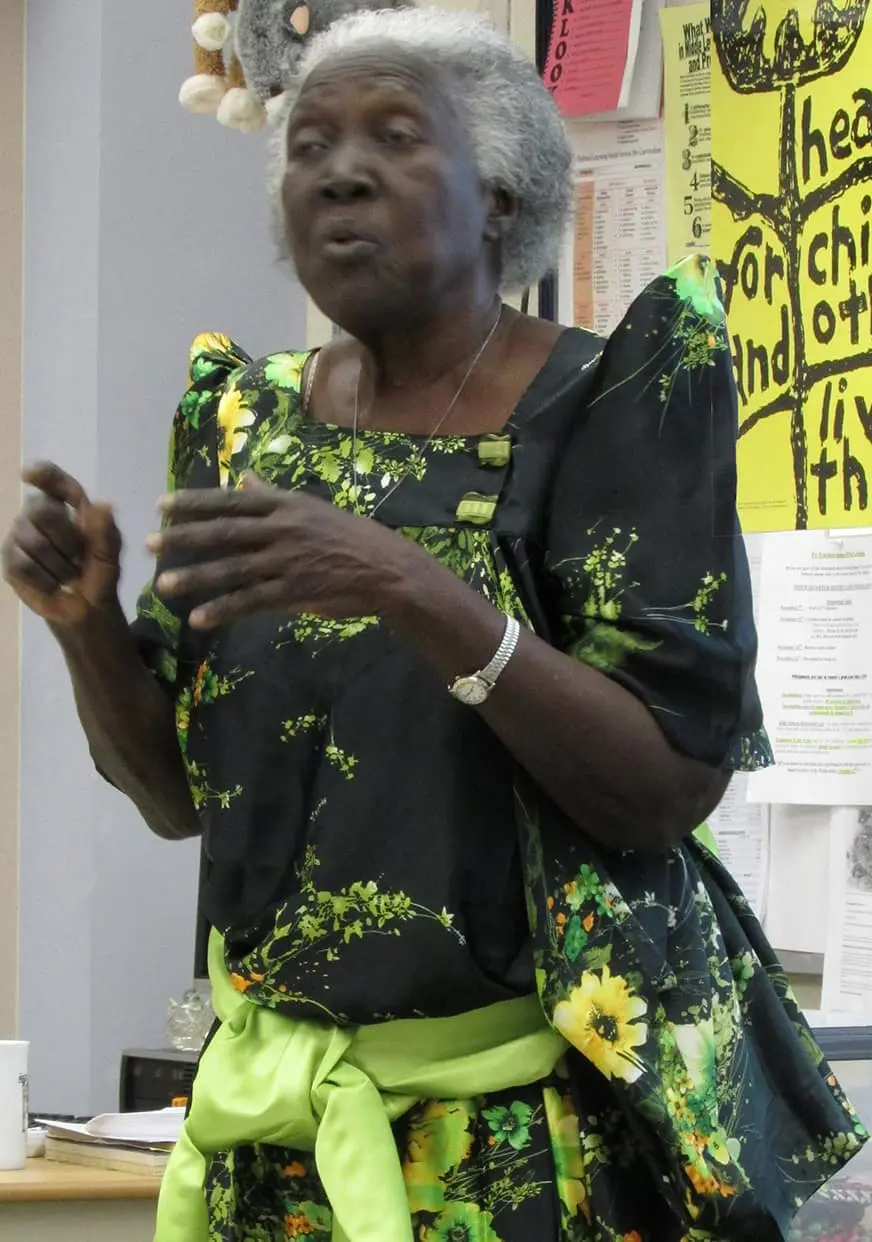
Observing several boys – which she learned were orphans – play “war games” near her home, she gathered eight of them together, offered them sanctuary, and began giving them lessons. Some were traditional education – writing and mathematics – which the students practiced using sticks to write in the ground because chalk and boards were not available. But underlying these was the emphasis that Abitimo and the group of other mothers/teachers she recruited placed on replacing these children’s hate and fear with love and security.
From this humble beginning grew the UNIFAT Primary School, the first private primary school in Uganda, eventually serving 1500 children, mostly refugees, and the mantra: Learning Through Love and Understanding.
The situation during the 1990’s and early 2000’s got worse, with armed violent conflicts ravishing rural Northern Ugandan and southern Sudanese communities and the outbreak of the HIV-AIDS epidemic, so much so that even camps housing 10’s of thousands refugees were under seige. An estimated 20,000 children were abducted and forced to serve as child soldiers. Many thousands of families living throughout Northern Uganda sought refuge in Gulu.
During the surge of refugee families, the UNIFAT school operated from several venues, including an abandoned railway station, and increasingly received support from Gulu city administrations. The combined educational – compassionate approach paid dividends in two notable aspects: UNIFAT students consistently achieved the highest scores on national tests taken for advancement to high school; and students, teachers, and parents found that UNIFAT’s approach helped their children regain positive outlooks, respect and caring for one another, and happiness. In 1994 the City of Gulu officially gave Abitimo title to land on what was then the western edge of city. This continues to serve as the campus.
An inspirational words from Mego Abitimo Rebecca Odongkara
Abitimo's Story - The Seeds
Abitimo Odongkara wrote this account in the late 1990's.
It describes how and why she became an educational and spiritual leader in her community and the UNIFAT Primary School, which she continued until her death in 2016. During that time she traveled extensively, telling her story and recruiting supporters while also raising her extended family.
THE SEEDS - Abitimo Rebecca Odongkara
Decades of dictatorship, civil wars, and AIDS brought suffering and poverty to all the families of Uganda, especially in the northern part of the country. In 1974 my family was forced to flee from the terror inflicted upon our country by Idi Amin. While living in exile in Philadelphia, USA, I held onto the idea of revenge against this Ugandan dictator. I wanted to pay back for the killings of relatives and friends who died through no fault of their own. I was angry and frustrated most of the time. While the idea of revenge was very strong, I began to wonder why I was not happy about the plan.
It was at that moment that I remembered the words in the Bible, “Vengeance is mine, saith the Lord.” I understood then that it was not my duty to avenge. It became clear that there would be no difference between my own actions and Idi Amin’s, if I carried out my plan of revenge.
As I prayed to be shown what to do, I was led to the parable about the sower who went sowing seeds. Some seeds fell by the roadside and birds ate them; some fell on stony places and sprang up but were scorched by the sun and withered away because they had no roots; some fell among thorns which choked them; others fell on good ground and yielded a crop–some a hundred fold, some sixty, some thirty.
This was the story that led me to understand and convinced me that my work had been revealed. I began to put into place the meaning of the different areas where seeds fell, and what happened to them. I knew then that the good ground could represent children and the sower could be me. The seeds could be the good information, imparted to the children.
I knew that the time had come. In the spring of 1983 I returned home to start a school among my people.
BACK IN UGANDA
Tension was high between civilians and government soldiers during this time, and rebels disturbed the peace. My tribe, called the Acholi people, was suspected to be supporting the rebels, yet we were victimized by both the rebels and the government soldiers. Many people deserted their homes and fled to a safer place in the town of Gulu. Families, and anyone who wanted to escape death, shared a shelter with others. There were many children who came and sheltered with us.
Sometimes, when no gunfire was ringing, the children would go out and play. They mostly imitated the fighting they saw. One day I saw them play this game and my heart cried as I remembered that it was because of war that I once left my country. I decided to persuade these children to learn a different kind of game. They were eager to listen and I introduced some learning games. The small number of children who had been playing war games soon increased as we learned new ways to play, and quickly I visited other shelters looking for teachers to help me start a preschool.
UNIFAT school started under a big tree in our family’s compound. It was interesting to note how children became so involved in learning numbers, letters and songs that they forgot all about the war game.
I was criticized for having a school in an inappropriate facility and was ordered by the Municipal Education Officer to close it. But I continued teaching, knowing that it was the best thing I could do to help these children. They were happy and growing. We all spent our time doing something useful instead of watching and waiting for rebel attacks.
Eventually I was called to the office of the town clerk to explain why I did not close the school. I said I did not mean to disrespect them, but was concerned about the future of our children. I thought that people would see the need for teaching our children, even if it had to be under a tree because of the circumstances of the war. My reasoning with them was effective. They encouraged me to look for a piece of land within the town and apply for it. This brought understanding between us, and gave me time to organize a proper school.
UNIFAT IS FORMED AND GROWS
This was during the peak of civil war, when thousands of families were forced to leave their rural homes and I saw many wandering up and down the streets of Gulu looking for shelter. I sought ways to help these women, and discussed with them the possibility of getting together to make traditional handcrafts. With the assistance of a church group we bought material to make bags and sashes, which were then sold. This project helped the women to earn much-needed funds, and brought us together for discussion about the war situation and its effect on women and children.
One afternoon as we sat under a tree working on our project, we saw five children coming toward us. Their parents had been killed by rebels. They had walked 20 miles, and were dehydrated, sick, and hungry. It was heart-breaking just to look at them. At first, I just wanted to help them temporarily until they were recovered from their journey. However, after some weeks and months I became accustomed to them and decided to keep them with me to ease their burdens. They have since become part of my family. Two of them subsequently graduated from UNIFAT, finished high school, and are currently attending University.
Just as our program was progressing, the rebels gained strength. They fought government troops in the villages, killing anyone they found. More people left their homes and came into town. Village schools were deserted and those students lucky enough to escape poured into Gulu town. This influx soon caused overcrowding of the few public classrooms. Now the Municipal Education Officer was more than ready to receive us, forgetting his previous criticism about what he considered the inappropriate physical environment of our school. Excitedly, he asked us to please not just expand our primary-1 class, but begin lessons at the primary-2 also.
We were very surprised at how easy it was. More children joined our program, using shelters that had been constructed for the refugees. The following year primary-3 and primary-4 classes were added. I had to look for a central place for our school.
We found a Railway Club building that was vacant because of the war, and were allowed to rent the building. We continued with our children, teaching classes one through four. The following year we added primary five.
Within two years, we built more classrooms and added primary six and seven. In 1993 our students took the high school entrance exam and astonished the district when all passed and were admitted into good high schools. Our preschool was also doing well and there was a waiting list of parents trying to get their children admitted to UNIFAT school. But then, the Railway Authorities wanted to reclaim their premises.
LOVE FINDS A WAY
I continued praying and working cheerfully. Our teachers were happily involved in teaching children with love in the best way they knew. Students were so interested in learning that parents and all visiting our school noticed and commented on the model behavior and discipline of our children.
There was a piece of land I had applied for on the advice of both the Town Clerk and Municipal Education Officer. We had been waiting, hoping that it would be given to us. Before this could occur, however, the Town Clerk fled Uganda and the Municipal Education Officer died. Thus, the two government people who had become our strongest supporters were now no longer in Gulu.
But the school continued. At the end of 1994 many more of our students passed the high school entrance exams, doing so well that UNIFAT school was recognized as one of the best primary schools in the entire country of Uganda.
A new Town Clerk was appointed who favored development and was pleased with our school’s program. At our annual parents’ day, we invited him and other government officials to attend and gave progress reports. As people talked, it became clear that there was much good news. Everyone present was happy. At this time, the Town Clerk addressed the audience and officially donated a piece of land to UNIFAT, one even bigger than the piece I had previously applied for. Now UNIFAT had its own home.
UNDERSTANDING MY CALL
I came to know my assignment in life only after realizing that vengeance belongs to God. Looking back, I understand that my call was to create this school and to care for orphans. I had not intended to open my home to needy children. I didn’t plan for this. Yet after doing all these things–the school is going on, the orphans are with me–I felt that this was what I had been called to do. There is no doubt in my mind and no interest or need to do something else. We are all given different calls. Sometimes you will have to wait until it is given to you–but then you will know.
Meet our board members
Dedicated professionals driving our success
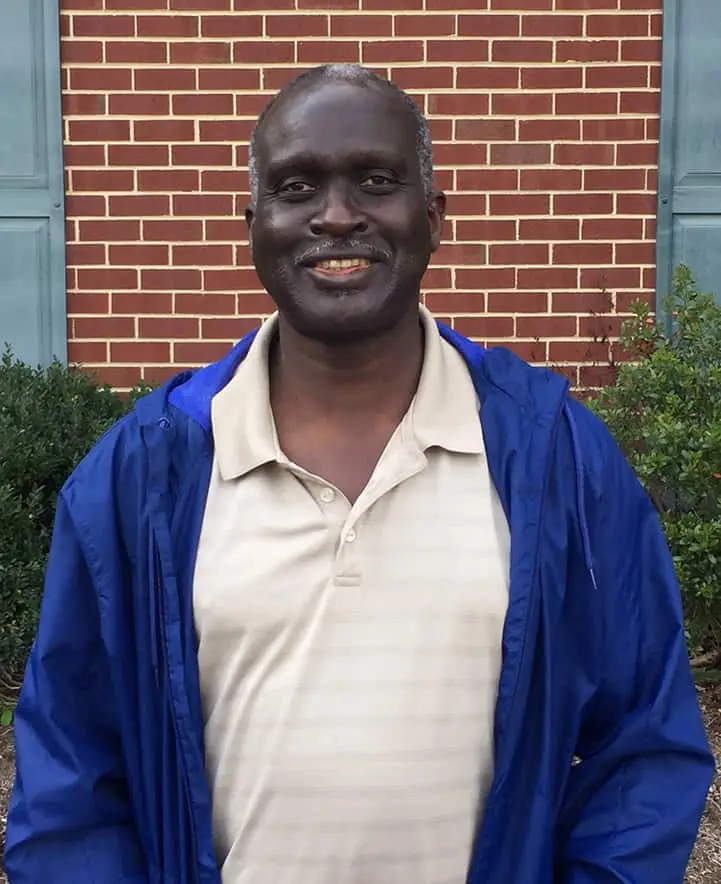
Patrick Odongkara
Director of UNIFAT Primary School
Patrick Odongkara, the third child of Abitimo, arrived in the US when Abitimo brought her family to Philadelphia in 1974. He and his wife Irene live in Philadelphia where they raised their three children. Patrick works as a registered nurse and is a board member of UNIFAT school as well as co-founder and co-chair of Friends Of UNIFAT.

Aaron Odongkara
Aaron Odongkara was the second youngest of Abitimo’s children when the family came to the United States in 1974. He enjoys working with youth and encouraging young people to use their talents to make a difference in society. Aaron is especially interested in seeing UNIFAT School become a place of excellence, continuing the vision of Abitimo.

Denis Okema
Denis Okema was one of the first children who, having escaped from captivity by the Lord’s Resistance Army terrorists, was “adopted” by Abitimo. He was among the first graduates of UNIFAT School, and later matriculated to Makerere University in Kampala. After moving to Philadelphia, he worked with several agencies promoting peaceful resolution to conflicts, completed a masters degree, taught and counseled high school youth, and recently received advanced certification in Diversity and Inclusion. He and his wife Lori live with their two children in the northern suburbs of Philadelphia.

Gertrude Noden
Gertrude Noden brings 20 years of experience as a classroom teacher and advocate for empowering youth through educational opportunities. She learned about UNIFAT while working with Denis Okema, who frequently visited her classroom and twice was accompanied by Abitomo. In November, 2019 she led an on-site Professional Development workshop for 40 teachers and staff, and has worked closely with UNIFAT teachers and staff to bring digital literacy, solar power, and mini-grants for student outreach projects. Gertrude and her husband live in Ithaca, NY, from where she offers workshops and organizes international youth programs that promote human rights.